
Three Key Points About Suntory's Business
- 11 時間前
- 読了時間: 5分
May 7, 2026
NAO MAKITA
SAYAKO TAMAI
REIKA TAKAHASHI
~ Suntory ranks third in the world! ~
In 2014, Suntory Holdings made one of the most important decisions in its corporate history when it acquired Beam Inc. for about 16 billion dollars. Beam Inc is a major American spirits company.As a result, by acquiring Beam, Suntory became the world's third largest alcoholic beverage manufacturer.
Shift to a global business
Beam Inc. owned many famous products, such as Jim Beam and Maker’s Mark. By buying these brands, Suntory immediately increased its influence in the international market. The deal allowed it to compete more directly with global players and shift from mostly domestic to truly global business.
Limits of the domestic alcohol market
At that time, the alcohol market in Japan was becoming smaller each year because the population was aging and many consumers were choosing healthier lifestyles. For example, per-person alcohol consumption in Japan in fiscal 2022 was 75.4 litres, down about 25 % from the peak in 1992 (101.8 litres). Suntory realised that if it continued to rely mainly on the domestic market, its growth would be limited. To secure the company’s future, Suntory made a strategic decision to expand overseas and strengthen its global presence.
Key Man: Niinami
A key person in this major move was Takeshi Niinami. Japanese business articles say that he played an active role in making the deal happen. After the acquisition, he joined the board of Beam Suntory and checked the company’s performance carefully. He also made strong comments such as “I am the boss of Beam,” which showed that he wanted to lead the new global team with confidence. Suntory trusted him because he could speak for the company on the world stage and guide its international strategy.
Niinami’s scandal
However, in 2025, Niinami caused a serious problem for Suntory. He became the focus of a police investigation after buying a health supplement overseas that was later found to contain cannabis-related ingredients, which are restricted by Japanese law. Because of this, the police began to investigate whether the purchase or import was illegal. As the situation became more serious, Niinami resigned from his position as chairman of Suntory Holdings. Although he said that he did not use illegal drugs and did not intend to break the law, the investigation still damaged his public image and raised questions about the company’s governance.
Overall
Even with this incident, the Beam acquisition remains a very important moment in Suntory’s history. It helped the company grow outside Japan and become stronger in the global market. At the same time, Niinami’s case shows that the actions of top leaders can have a large impact on a company’s reputation and stability. The story reminds us that good strategy, clear leadership, healthy domestic markets and personal responsibility are all necessary for a global company to succeed.
References:
~ International Venture company(Mokable) ~

In recent years, new businesses created inside Suntory have begun to expand not only in Japan but also overseas. One symbolic example is Mokable, a startup that offers a new way to enjoy coffee by eating it. In 2025, Mokable established a North American subsidiary and started its global expansion. Their product turns finely-ground coffee beans into a chocolate-like form, creating a sustainable and unique consumer experience. The company also raised 150 million yen in seed funding, with Suntory as one of the investors. Why is a large company like Suntory able to create such innovative businesses? The answer lies in its internal entrepreneurship program called FRONTIER DOJO. This program allows employees to propose new business ideas and develop them step by step with mentoring and reviews. It has a special system with levels such as White Belt, Brown Belt, Black Belt, and Master, showing the progress of each idea. Employees who pass the final stage must take responsibility and lead the business themselves. This makes the program not just an idea contest but a system to train real in-house entrepreneurs. Mokable is one of the projects born from this program. Through FRONTIER DOJO, the idea was refined, supported by experts, and developed into a full business plan. After that, the project moved on to raising funds as an independent company. This process shows that Suntory provides more than a place to share ideas, it offers a full pathway to turn ideas into real businesses.Suntory is also active in working with external startups. Through its Corporate Venture Capital (CVC) function, the company invests in areas such as food, health, biotechnology, and sustainability. Working with outside innovators helps Suntory bring in new technologies and speed up business development, including projects that began inside the company. Mokable’s expansion into North America is a strong example of how Suntory combines internal talent with external partnerships to create new business models. Even though it is a traditional major company, Suntory continues to build systems that support innovation and global business growth. Through FRONTIER DOJO and its CVC activities, more new projects like Mokable are expected to emerge from Suntory in the future.
References:
~ Suntory and Family Business ~
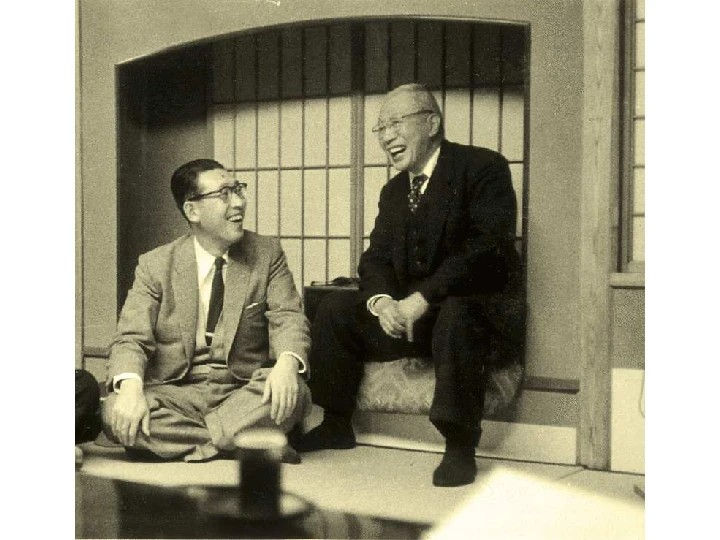
Suntory is a successful family business. Suntory is a family business, which means it is managed mainly by the Torii family. The company is not listed on the stock market. This is because the family wants to keep control and make long-term decisions, not just short-term profits. In family companies, owners often care deeply about the company’s history and its role in society.
Is it good to have a family business?
In Japan, family businesses were once seen as old-fashioned or secretive. But today, many people see them as strong and successful. Research shows that Japanese family companies often have high profits, long lives, and a strong sense of social responsibility. Many of them have continued for hundreds of years.

A contribution that only Suntory can make
Because Suntory is family-owned, it can easily take part in social and cultural activities. Suntory believes in the idea of “giving back to society.” This idea is called the Triple win — sharing profits among the company, customers, and society.
Suntory has done many social activities. In 1921, it opened a free medical clinic, which later became a welfare foundation that runs nursing homes and care centers. Suntory also supports art and culture. It opened the Suntory Museum of Art in 1961 and the Suntory Hall in 1986, which is one of Japan’s top concert halls. The company also gives awards, such as the Suntory Music Award and the Suntory Regional Culture Award, to support artists and researchers.
Suntory also cares about nature and sports. It started the “Love Birds” campaign in 1973 to protect wild birds and began a water education program called “Mizuiku: Forest and Water School” in 2004. The company also has its own rugby and volleyball teams and sponsors golf tournaments like the Suntory Ladies Open.
Family management has both good and bad sides. It can keep a strong vision and tradition, but it may also limit new ideas. However, Suntory shows that a family business can stay successful, creative, and kind to society for more than 100 years.
References:


